Point-of-Care Advertising That Reaches Patients When Health Decisions Happen
PlaceBased delivers audited, geo-targeted point-of-care media across clinics, hospitals, urgent care centers, and pharmacies. Our campaigns are built for public health, medication education, and community impact—available in English, Spanish, and 15+ additional languages.

What is Point-of-Care Advertising?
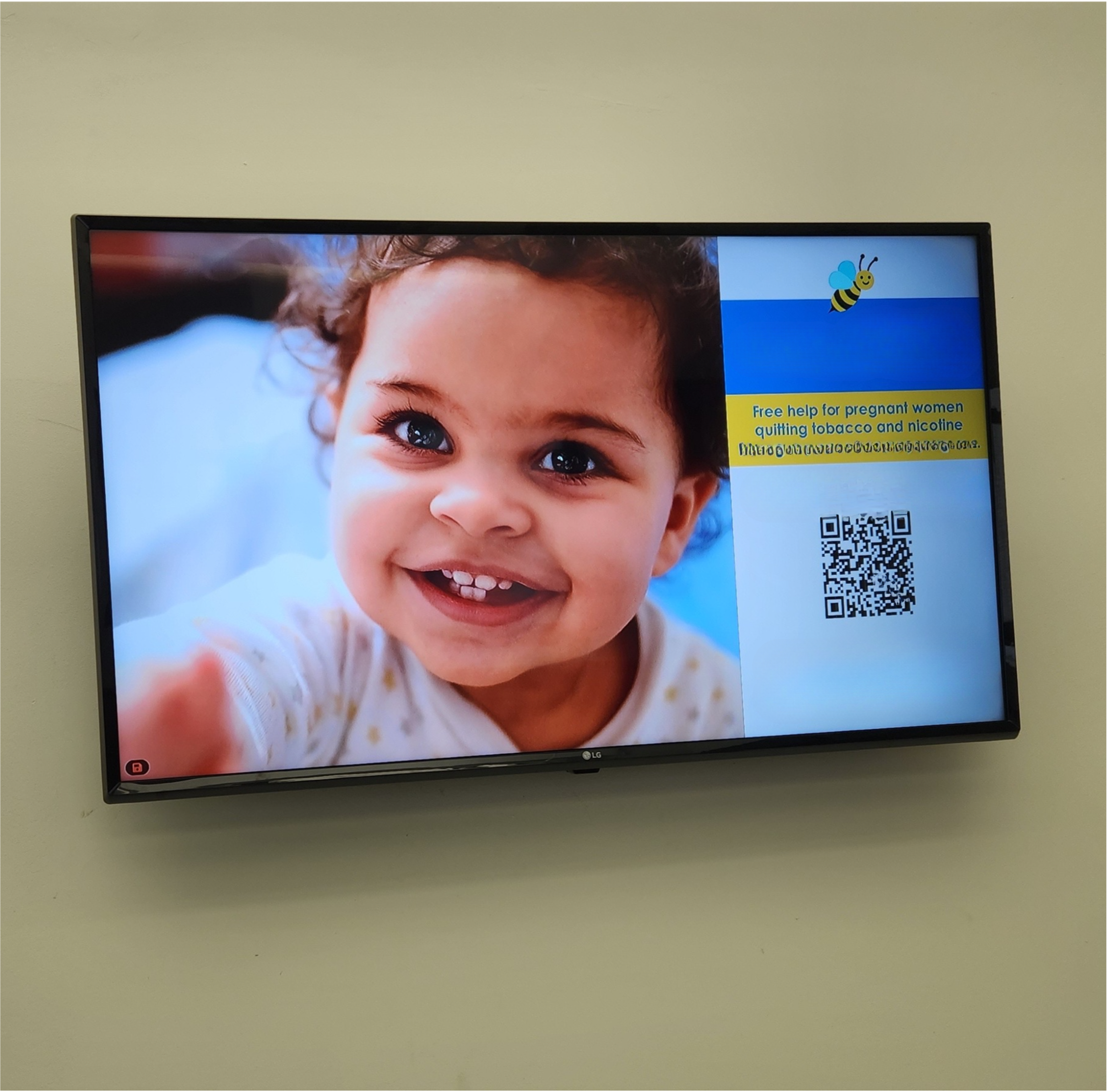
Point-of-care (POC) advertising places targeted health messages directly in front of patients inside healthcare environments—clinics, hospitals, pharmacies, and urgent care centers. Unlike broad-reach channels, POC media reaches people at the exact moment they’re making health decisions, thinking about their conditions, and talking with providers.
POC formats include digital displays in waiting rooms, educational posters in exam rooms, interactive kiosks, printed brochures, and privacy-safe mobile extensions. The result is a media channel that combines the trust of a clinical setting with the targeting precision of digital advertising.

Why Point-of-Care Advertising Works?
Healthcare settings offer extended dwell times—often 15-20 minutes or more—providing brands with valuable attention windows rare in today's fragmented media landscape. During these moments, patients are focused on their health, receptive to relevant information, and primed for action.
Why POC Outperforms Other Media Channels
58% of patients who encountered a pharmaceutical ad in the office reported it made them more knowledgeable about their medications (Source: M3 MI Research)
45% of physicians indicated that patient-sourced information can cause them to consider a treatment they may not have otherwise (Source: OptimizeRx, 2024)
82% of patients value health information received in healthcare settings
(Source: Solomon Partners Point of Care Report)
Point-of-care is the most trusted information channel among exposed patients (POCMA/Ipsos, 2025). Here's what the latest research shows:
| Point-of-Care | Television | Digital Display | |
|---|---|---|---|
| Trust Level | Highest — clinical setting | Moderate | Low — ad fatigue |
| Dwell Time | 15–20+ minutes | Varies (1 in 3 ads plays to empty room) | Seconds |
| Audience Intent | Actively thinking about health | Passive | Often irrelevant context |
| Action Rate | 58% ask physician about advertised treatment | Low recall at point of care | ~40% of spend misses target audience |
| HIPAA Safe | Yes — location-based, no PHI | N/A | Privacy concerns rising |
Sources: Solomon Partners 2025 POC Report; POCMA/M3 MI Industry Research; POCMA 2026 Media Planning Guide.
Reaching the Right Patients Across Medical Specialties
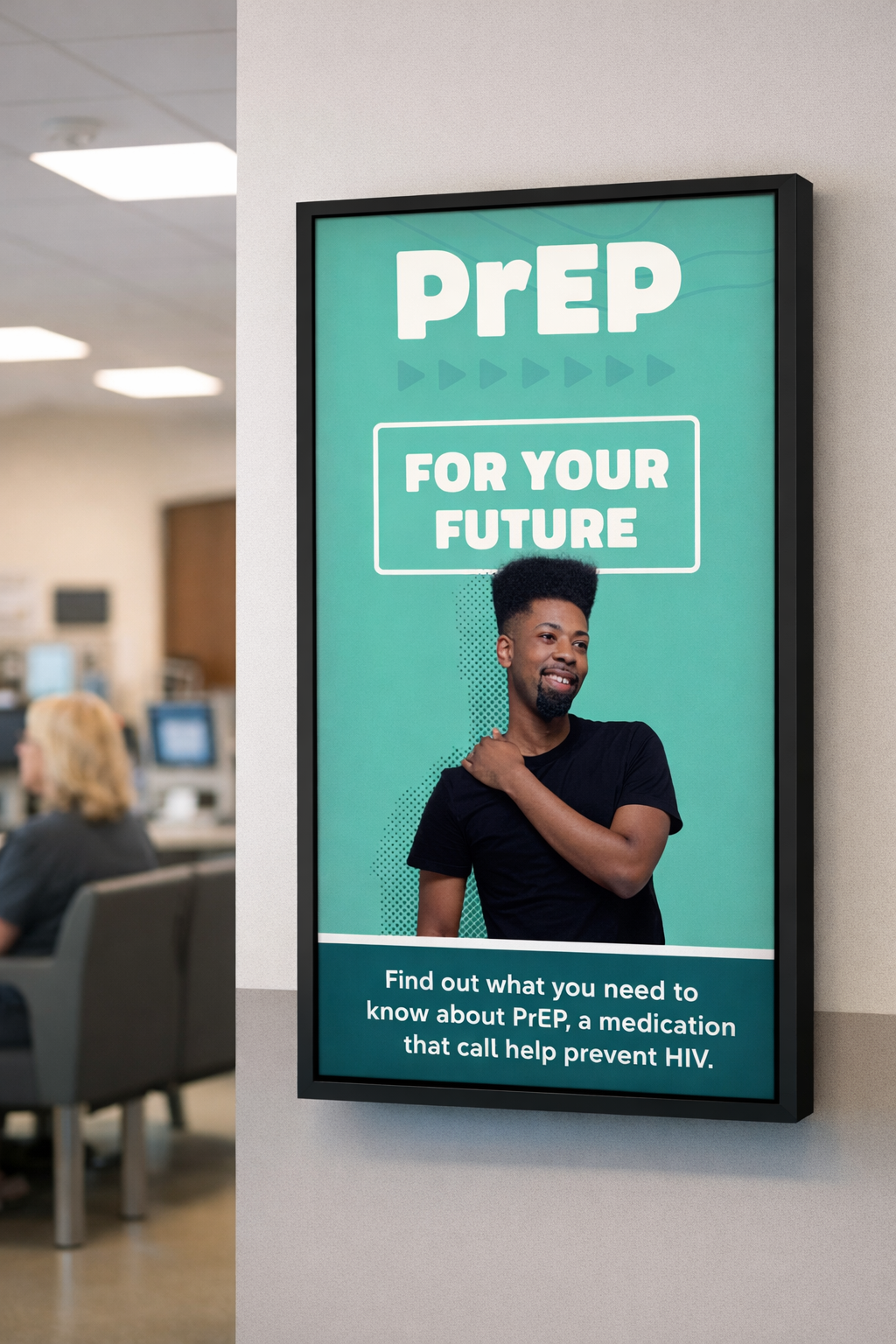
PlaceBased's point-of-care network spans a diverse range of medical specialties, enabling advertisers to target specific patient populations with precision. From primary care practices for broad wellness messaging to specialized environments for targeted campaigns, advertisers can reach patients across:
Cardiology – Cardiovascular health and heart condition awareness
Endocrinology – Diabetes and metabolic condition messaging
Oncology – Cancer treatment and supportive care information
Orthopedics – Musculoskeletal health and mobility solutions
Dermatology – Skin health and condition management
OB/GYN – Women's health and reproductive wellness
Pediatrics – Child and family wellness messaging
Pulmonology – Respiratory condition education
Neurology – Brain health and neurological condition awareness
Gastroenterology – Digestive health and GI condition management
This specialty-specific targeting ensures advertising content aligns with patient needs, maximizing relevance and engagement.
For pharmaceutical companies, point-of-care advertising solves a problem that traditional media channels cannot: reaching the right patients at the exact moment health decisions are being made—inside the clinical environments where prescribing happens.
The POC channel is one of the fastest-growing segments in pharma media. POCMA member revenues surpassed $1 billion in 2024, growing 16% year-over-year, and POC spend overall has increased 171% since 2019. Meanwhile, pharma spending on traditional HCP digital display has declined 22% over the same period, as marketers shift toward channels that deliver precision, trust, and measurable clinical outcomes.
PlaceBased helps pharmaceutical brands, agencies, and managed care organizations deploy POC campaigns across our nationwide network of clinics, hospitals, pharmacies, and specialty practices.
Why Pharma Brands Choose Point-of-Care
Reach patients at the moment of decision — POC messaging appears in waiting rooms and exam rooms minutes before the provider conversation—when patients are focused on their health and receptive to treatment information.
Drive new-to-brand prescriptions (NBRx) — Industry case studies show POC can account for 35% of new patient starts while representing just 14% of total media spend. POC messaging that includes formulary information has been shown to generate an average 11.9% script lift.
Support treatment adherence — Pharmacy-based POC materials reinforce medication education at the point of pickup, supporting refill rates and long-term adherence—especially critical for chronic conditions.
Complement your omnichannel strategy — POC fills a unique gap in the media plan. While CTV and digital display build awareness upstream, POC converts that awareness into action at the clinical decision point. Coordinated HCP-and-patient media strategies have been shown to drive 35% higher total prescriptions filled compared to non-integrated campaigns.
HIPAA-compliant by design — Unlike digital retargeting or social media placements, POC media targets by location, specialty, and geography—never by individual patient health data. This makes it inherently privacy-safe and compliant with evolving regulatory expectations.
Point-of-Care Advertising for Pharmaceutical Brands
| Campaign Type | Objective | Typical Venue / Format |
|---|---|---|
| Brand Launch / NBRx | Drive awareness and first prescriptions for new medications | Specialty clinic waiting rooms, digital displays, exam room materials |
| Adherence & Refill | Reinforce medication compliance and support long-term therapy | Pharmacy counters, bag stuffers, pharmacy digital screens |
| Disease Awareness | Educate patients on conditions and available treatments | Primary care and specialty waiting rooms, educational posters |
| Copay / Savings Card | Promote patient assistance programs and reduce cost barriers | Pharmacy point-of-sale, exam room materials, digital kiosks |
| DTC / Direct-to-Patient | Empower patients to initiate treatment conversations with providers | Waiting room digital displays, printed condition guides |
| HCP Education | Deliver clinical updates and treatment guidelines to providers | Back-office materials, staff lounge displays, exam room references |
| Vaccine Promotion | Increase vaccination rates for seasonal and specialty vaccines | Urgent care, pharmacy waiting areas, pediatric clinics |
Reaching the Right Audiences
Effective point-of-care advertising goes beyond location—it's about reaching the right people with the right message. PlaceBased's POC network enables precise targeting across diverse patient populations, from Hispanic/Latin-X and BIPOC communities to aging populations, parents, veterans, and more.
Point-of-care advertising also reaches the caregivers, family members, and companions who often play a critical role in healthcare decisions—ensuring your message influences the full circle of decision-makers.

Point-of-Care Advertising That Reaches People When It Matters Most
Our Point-of-Care network is designed to support both awareness and action—whether that’s encouraging prevention, promoting resources, educating patients, or driving next-step behaviors. From overdose prevention and chronic condition education to insurance enrollment and wellness initiatives, POC media ensures your message is seen at the exact moment it’s most relevant.

Point-of-Care is the Most Trusted Information Channel Among Patients
Independent research shows point-of-care is the most trusted channel among exposed patients (POCMA/Ipsos, 2025), which is why we activate clinics, hospitals, and pharmacies for public-health and healthcare campaigns.
Point-of-Care Channels & Formats
Choosing the right channels in point-of-care environments involves understanding the patient journey and the touchpoints where they are most receptive. PlaceBased offers:
Digital Displays and Screens – Located in waiting areas, lobbies, and patient rooms to deliver health-related information, educational content, and promotional messaging
Interactive Kiosks – Touch-screen displays providing patients access to health information, educational materials, and interactive content
Printed Materials – Brochures, pamphlets, posters, and flyers in waiting areas and examination rooms with educational and promotional content
Waiting Room Television Networks – Custom TV programming featuring health education, wellness content, and promotional messaging
Mobile POC Advertising – Privacy-safe, geofenced audiences and contextual placements that complement in-venue POC media without using sensitive personal health data

Reporting & Audits - Transparent and compliance-friendly delivery
Performance summaries: Weekly/monthly impression reports with methodology notes (venue counts, flight dates, exceptions).
Venue-level proof of posting: Time-stamped, geo-tagged photos and verification for each location
Attribution options: QR code and vanity URL tracking, UTM tagging, and call/text short codes (optional).
Delivery breakdowns: Heat maps and tables by ZIP/county, venue type, and language split (Eng/Span).
Quality controls: Brand-safety/compliance checks, change-log of swaps/moves, and bonus materials
Final wrap: Consolidated audit rate, total impressions, engagement metrics, bonus value delivered, and next-step recommendations.

Identifying Your Audience for Point-of-Care Advertising.
Understanding your audience in point-of-care marketing is about more than demographics. It's about understanding their healthcare journey, their concerns, and their information needs. Tailoring your approach to meet these needs is essential for effective communication.
Your message in point-of-care marketing should be clear, empathetic, and relevant to your audience's healthcare experience. Focus on providing value through information and support, rather than just promoting a product or service.
Frequently Asked Questions About Point-of-Care Advertising
Point-of-care (POC) advertising delivers targeted health messages to patients inside healthcare environments—including clinics, hospitals, pharmacies, and urgent care centers. Formats include digital displays, printed materials, interactive kiosks, and privacy-safe mobile extensions. POC media reaches patients at the moment they're actively thinking about their health and making care decisions.
Traditional healthcare advertising (TV, digital display, social media) reaches broad audiences in non-clinical contexts. Point-of-care advertising reaches patients inside healthcare facilities during the 15–20+ minutes they spend waiting for appointments—when trust is highest and health intent is strongest. Research shows POC is the most trusted information channel among exposed patients, outperforming TV, digital, and social media for driving treatment conversations and prescription behavior.
PlaceBased's POC network includes primary care clinics, specialty practices (cardiology, endocrinology, oncology, dermatology, and more), hospitals, urgent care centers, and pharmacies. Campaigns can be targeted by facility type, medical specialty, ZIP code, DMA, and language.
Yes. POC is one of the fastest-growing channels in pharma media, with POCMA member revenues surpassing $1 billion in 2024. Industry research shows POC drives higher prescription action than television: 58% of patients who see an in-office ad ask their physician about the treatment, and 34% receive a prescription. A Veeva Crossix study found POC accounted for 35% of new patient starts with just 14% of media spend.
Yes. PlaceBased offers geo-targeting by ZIP code, county, DMA, and state, as well as specialty-level targeting across 10+ medical disciplines. This ensures your message reaches the right patient populations in the right clinical contexts.
PlaceBased campaigns are verified and audited by the Alliance for Audited Media (AAM), ensuring third-party accountability for every campaign. In addition, PlaceBased provides venue-level proof of posting with photos for every location. Reporting includes weekly/monthly impression data, delivery breakdowns by geography and venue type, and attribution options including QR codes, vanity URLs, and UTM tracking. All campaigns include brand-safety and compliance checks.
Yes. POC media targets by physical location, medical specialty, and geography—never by individual patient health data. Unlike digital retargeting or programmatic display, POC does not collect, store, or use protected health information (PHI). This makes it inherently privacy-safe and HIPAA-compliant.
PlaceBased offers POC content in English, Spanish, and 15+ additional languages, with cultural adaptation—not just translation—to ensure messages resonate with diverse patient populations.
Most campaigns can be planned, produced, and deployed within 2–4 weeks, depending on scope, creative requirements, and venue availability. PlaceBased handles venue coordination, material production, installation, and verification.
POC fills the bottom-of-funnel gap that other channels can't reach. While CTV and digital display build upstream awareness, POC converts that awareness into action at the clinical decision point. Coordinated campaigns that integrate HCP and patient media have been shown to drive significantly higher prescription volume than non-integrated approaches.
Let’s Talk.
Ready to reach patients at the moments that matter most? Connect with PlaceBased to learn how point-of-care advertising can drive meaningful outcomes for your brand.